
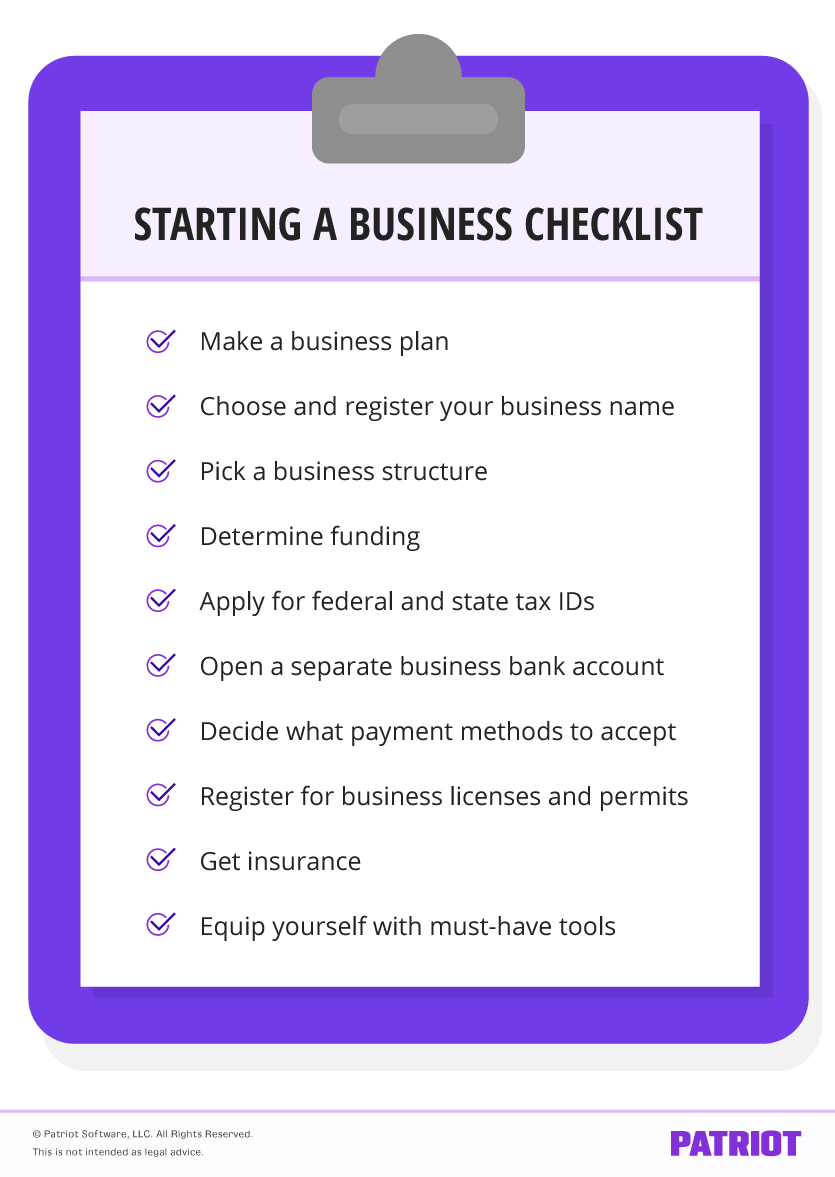
Starting a Business Checklist
Quick Answer
A solid starting a business checklist is: validate the idea, choose a name, form an LLC, get an EIN, open a business bank account, and set up simple bookkeeping. Do them in order and you avoid expensive mistakes. You can form your LLC for $39 with Northwest.
I have started businesses before, and I have also messed them up. The
ones that failed did not fail because the ideas were bad. They failed
because I skipped steps. I got excited about the product and ignored the
boring stuff like legal structure, insurance, and proper financial
tracking. I learned the hard way that starting a business is not just
about having a good idea. It is about following a process.
This checklist is the process I wish I had followed from the
beginning. It is based on my experience, the mistakes I have made, and
the research I have done since. I am going to walk you through every
major step, from validating your idea to launching your business. I will
tell you what to do, why it matters, and where I have seen founders get
into trouble.
Let us get started.
One of the very first steps below is forming your LLC, and it is easier than most people expect. You can form your LLC for $39 with Northwest.
Form Your LLC for $39 with Northwest →Lowest 3-year cost we found: Northwest $289 vs Bizee $298 vs ZenBusiness $497 (service fees; state fees extra). Northwest also puts its address on your public filings instead of yours where the state allows.
Why a
Starting a Business Checklist Matters in 2026
Starting a business is exciting. It is also overwhelming. There is a
lot to manage, from writing your business plan and registering your
company to organizing your finances and planning your marketing .
Without a structured approach, new business owners often miss critical
requirements or waste money on steps they are not ready for .
Here is what I have learned. Many startups fail not because of bad
ideas, but because of preventable legal and operational issues. These
include ownership disputes, licensing violations, misclassified workers,
unenforceable contracts, brand conflicts, and tax penalties . A
structured checklist helps ensure your business is properly formed,
compliant, and protected from day one .
In 2026, starting a business is faster than ever, but also more
regulated, visible, and legally complex. Online platforms, remote work,
cross-state hiring, data privacy laws, and increased enforcement mean
skipping legal steps early can create expensive problems later . You
cannot afford to cut corners.
Phase One: Validate Your Idea
Before you spend any money, before you register anything, before you
tell your friends and family about your brilliant plan, you need to
validate your idea. This is the step most founders skip, and it is the
step that causes the most heartache.
Research Your Market and
Competitors
Market research helps you understand your customers and the
competitors in your industry. It can also help you understand if your
product or service is likely to be successful . You need to confirm that
there is real demand for what you are selling .
To research potential customers, you can use surveys, focus groups,
interviews, and even just conversations with friends and family . Ask
questions like: Is there a need for my offering? What percentage of the
population would be interested? Where do my potential customers live?
What are they like? What similar options are already available? And what
are the prices for similar items in my area? .
You also need to analyze your competition. Review your competition to
see what kinds of barriers exist to entering the market. If the
competition has already cornered the market, it might be time to head
back to the drawing board . Look at what customers complain about and
where gaps exist .
Test Your Idea with
Potential Customers
Validation means researching your audience, testing the concept, and
collecting feedback. Build a prototype, set up a landing page, or talk
to potential customers . Are they willing to pay for it? Are you solving
a pain point or just offering a nice-to-have? .
Talk to real people who might buy from you. Ask what problems they
face and whether your solution would help . Ways to test your idea
include conversations, surveys, pre-sales, and creating a minimum viable
product . If you have a consumer product, talking to 100 potential
clients is ideal. For B2B startups, aim for at least 15 potential
clients . When you talk to people and you get signals from those people
that there could be some buyer intent, that is traction .
Define Your Unique Selling
Point
Your unique selling point explains what makes your business different
from competitors. Sum it up in one or two sentences that you can use
when pitching to investors and customers . A strong USP answers the
question: why should someone buy from you instead of the
competition? .
Phase Two: Build Your
Foundation
Once you have validated your idea, you need to build the foundation
for your business. This includes your business plan, your business
structure, and your business name.
Write a Business Plan
A business plan is a document that outlines your core business
objectives and how you plan to achieve them over a set period . It
serves as your roadmap and is often required when applying for loans or
seeking investors . It may also be required for your business to receive
funding from banks and investors .
A helpful business plan covers your business’s value proposition, the
key partners it may work with, how you plan to interact with customers,
what customer communication channels you will use, and how the company
will make money and what you expect your financials to look like in the
coming months and years .
Remember that a business plan is a living document that changes as
your business does. It will require revisions when your goals and
objectives change . The U.S. Small Business Administration has multiple
business plan templates you can use to get started right away .
Choose Your Business
Structure
One of the first legal decisions is the selection of an entity . Your
business structure affects taxes, liability, and how you operate day to
day. Common options include sole proprietorship, partnership, limited
liability company (LLC), and corporation .
Here is a brief breakdown of the different types of structures :
Sole proprietorship: A simple structure that
involves only a single person as owner. Complexity is low. However, you
are personally liable for business debts .
Partnership: A structure involving two or more
individuals working together that usually share profits and liability.
Complexity is medium to high .
Limited liability company (LLC): A company model
that offers flexible tax strategies for more complex businesses and
limits liability for owners. Complexity is medium to high . An LLC
offers liability protection while keeping taxes straightforward . This
is often the best choice for small and mid-sized businesses .
Corporation: The most complex model that provides
ample asset protection in case issues arise and makes it easier for a
business to raise capital. Complexity is high . Corporations are often
used for investor-backed or scaling companies .
Your choice affects personal liability protection, tax treatment,
ownership and voting rights, ability to raise capital, and exit or sale
options . Choosing the wrong structure can limit growth or create tax
exposure . Get this decision right early because revisiting it later is
costly, both in time and legal fees . Consult a legal or financial
advisor to determine which structure fits your goals and risk
tolerance .
Choose a Business
Name and Secure a Domain
Choosing a name for your business is a major step in creating a
brand. It is how customers and competition will perceive you . Choose a
name that accurately reflects the type of products you sell or the
services you provide. Customers need to know what you can help them with
in seconds .
You need to check that your business name is available in your
state . If you are registering your business as a legal entity, the name
will need to be checked to see if it is in conflict with other entities
already created . It is best to have multiple options ready just in case
your favorite is already taken .
You should also register a domain name for your website. It is a good
idea to register a domain now, even if you are not ready for a website.
It means you will have the domain name you want when you are ready to
use it . A good domain name represents your business and is easy for
people to remember .
Phase Three: Set Up
Legally and Financially
This is where things get official. You need to register your
business, get your tax IDs, open a bank account, and set up your
accounting system.
Register Your Business
and Get an EIN
Once you choose a structure, complete registration correctly . This
typically involves:
- Filing formation documents with the state
- Appointing a registered agent
- Obtaining an EIN from the IRS
- Registering any required trade names or DBAs
An Employer Identification Number (EIN) is a tax ID from the Internal
Revenue Service (IRS) that you need for hiring employees, opening
business bank accounts, and filing taxes . You can apply for an EIN
through the IRS website. It is free and takes minutes . Limited
liability companies, corporations, and partnerships are required to get
one, and they are required for sole proprietors that have
employees .
Obtain Necessary Licenses
and Permits
Most businesses need licenses beyond state registration .
Requirements vary by industry, state, and locality . Common requirements
include:
- General business license required by most cities and counties
- City and county business licenses
- Zoning approval
- Home-based business authorization
- Industry-specific permits
- Professional licenses needed for regulated professions like
accounting, real estate, or healthcare - Health permits required for food service and certain retail
businesses
Operating without the proper license can lead to fines, shutdowns, or
unenforceable contracts . Check with your city, county, and state
offices to identify which licenses you need .
Open a Business Bank Account
Keeping your personal and business finances separate is essential
from day one . Open a dedicated business bank account to track income
and expenses clearly . A separate business bank account is not optional
for a business you intend to run seriously .
What you need to open a business account :
- EIN or tax ID, your business identification number
- Business registration documents proving your business is
registered - Ownership documents like partnership agreement or articles of
incorporation if applicable - Personal identification like driver’s license or passport
Set Up Your Finances and
Accounting
Set up an accounting system to manage invoices, receipts, and tax
obligations . Consistent financial tracking prevents costly mistakes,
whether you use accounting software or hire a bookkeeper .
Accounting software tracks your income, expenses, invoices, and
financial reports automatically. Cloud-based software lets you access
your finances from anywhere and simplifies tax preparation . Set up a
basic bookkeeping or accounting workflow, even a simple spreadsheet to
start. Categorize expenses from day one, set up an invoice and payment
collection process, and review cash inflows and outflows regularly .
Create a Startup Budget
Your startup costs are everything you need to pay before your
business starts generating income. Understanding these costs will help
you get funding and build a successful business .
Group your expenses into categories :
- Startup expenses: Registration expenses, legal
expenses, licensing, machinery, and installation of software - Operation expenses: Website creation, branding,
inventory purchases, marketing expense for launch, and developing
products - Expenses in operations: Rent, wages, subscriptions,
shipping and packaging, insurance, and taxes
Create several versions of your budget reflecting worst-case,
expected, and best-case trading conditions so you can see how poor
trading would affect cash flow .
Phase Four: Protect Your
Business
You need to protect your business from unexpected events and legal
issues. This includes getting insurance, protecting your brand, and
securing your data.
Get Business Insurance
Business insurance protects you from financial losses due to
accidents, lawsuits, property damage, and other risks . The coverage you
need depends on your industry, location, and business activities .
Common types of business insurance :
- General liability insurance: Covers injuries,
property damage, and advertising claims - Professional liability insurance: Protects against
claims of negligence or mistakes in your services - Property insurance: Covers damage to your
equipment, inventory, and workspace - Workers’ compensation: Required in most states if
you have employees
Insurance supports risk management but does not replace
compliance .
Protect Your Brand
and Intellectual Property
Your business name and creations may be your most valuable assets .
Protection steps include:
- Clearing your business name before launch
- Evaluating trademark risks
- Protecting logos, slogans, and content
- Using IP assignment clauses with contractors
- Avoiding infringing third-party content
State registration does not provide trademark protection . You can
register a trademark for your business name, logo, tagline, or other
parts of your brand .
Prepare Website and
Online Compliance
Even small businesses face online legal obligations . Your online
checklist should include:
- Privacy policy that matches actual practices
- Terms of service or terms of use
- Refund and shipping policies
- Subscription disclosures if applicable
- Basic cybersecurity safeguards
Copied or inaccurate policies increase legal exposure . Protecting
your data and customer information is non-negotiable. Use strong
passwords, encrypted backups, firewalls, and two-factor
authentication .
Phase Five: Launch and Grow
You are almost ready to launch. But before you do, you need a
marketing strategy, a launch plan, and systems in place for growth.
Create a Marketing Strategy
A marketing strategy helps you reach your target audience and build
brand awareness from the start. Begin by defining who your ideal
customers are and where they spend their time .
Focus on a few high-impact channels rather than trying to be
everywhere at once :
- Website and SEO: Build a professional website
optimized for search engines - Social media: Choose platforms where your target
audience is most active - Email marketing: Build an email list to nurture
leads and retain customers - Local marketing: Use local directories, events, and
partnerships to build community presence
Track your results and adjust your approach based on what drives the
most engagement and conversions .
Develop a Launch Plan
Your customer acquisition plan and customer experience plan must be
coordinated before anything goes live, not worked out after .
Your launch plan must address :
- Where will your early adopters come from?
- What will your initial offer be, and how will it be
communicated? - How will leads be generated and nurtured?
- How will sales orders and registrations be processed?
- How will you deal with customer support, returns, and complaints
from the get-go?
Start with a small, specific target group first before going
broad .
Build Your Team
Hiring the right people is one of the most important decisions you
will make as a new business owner . Start by identifying the roles you
need to fill immediately versus those you can add later .
Before your first hire, set up payroll, understand your state’s
employment laws, and create job descriptions. Consider whether you need
full-time employees, part-time staff, or contractors . Invest in
onboarding to help new team members contribute quickly and align with
your business goals .
Gather Feedback and Iterate
Throughout the process of building your startup, but especially after
launch, you should gather feedback from customers and make improvements
to your product or service . The best founders and the best startups are
constantly iterating. These companies work to understand changes in
their customer preferences and stay ahead of those shifts .
Common Mistakes I
Have Seen Founders Make
I have made most of these mistakes myself. Learn from my pain.
Skipping Idea Validation
Many founders skip this step or treat it as a gut-feel exercise .
Enthusiasm is not the same as demand . If you do not validate your idea,
you risk spending time and money on something nobody wants.
Choosing the Wrong
Business Structure
Getting this decision wrong is costly in time and legal fees . Sole
proprietorship is easier to start but does not offer liability
protection. An LLC provides liability protection and tax flexibility .
Choose based on your needs for liability protection, ownership
structure, and funding plans.
This is the step most first-time owners delay, and it is the one I never skip. Forming your LLC early keeps your personal assets protected from day one, and the service I recommend is Northwest Registered Agent.
Form Your LLC with Northwest for $39 →
Mixing Personal and
Business Finances
Keeping personal and business money in the same account creates
problems that compound quickly . A separate business bank account is not
optional for a business you intend to run seriously . This mistake makes
accounting harder and can undermine your legal protections .
A business bank account is far easier to open once your LLC is in place. You can form your LLC for $39 with Northwest first.
Start Your LLC for $39 with Northwest →
Delaying Tax Registration
Tax obligations start at registration, not after the first profitable
year. Set up record-keeping systems at this stage, not once things get
busy . Many startups face penalties because tax registration was delayed
or overlooked .
Operating
Without Proper Licenses or Insurance
This is the step most first-time founders delay, and it causes more
avoidable problems than almost any other. Registration alone rarely
covers everything a business legally needs to operate . Operating
without the proper license can lead to fines, shutdowns, or
unenforceable contracts .
Not Having Internal
Governance Documents
Internal documents are critical, even for single-owner businesses .
Key documents include operating agreements for LLCs and bylaws and
shareholder agreements for corporations . Without these documents,
default state laws apply, and courts may decide disputes for you .
My Honest Recommendations
Here is my advice based on what I have seen work.
Start with validation. Do not spend money on
registration, logos, or fancy websites until you have proven that people
will pay for what you are offering. Talk to potential customers. Run
pre-sales. Create a minimum viable product.
Choose your structure carefully. If you have any
liability risk, get an LLC. The cost is worth the protection. If you are
just testing an idea with no clients and no contracts, a sole
proprietorship is fine temporarily.
Separate your finances immediately. Open a business
bank account before you make your first sale. It makes accounting easier
and protects your personal assets.
Get insurance before you start. One lawsuit can
destroy your business. General liability insurance is cheap compared to
the cost of a claim.
Use free tools. You do not need to spend money on
software subscriptions on day one. Most free tiers are sufficient for
starting out. Upgrade when you have paying clients.
Write a simple business plan. It does not need to be
fifty pages. It just needs to answer the right questions: who is your
customer, what problem are you solving, how will you make money, and
what will it cost? .
When to Form an LLC
Before you file, it helps to understand how to form an LLC step by step, what it will cost in your state, and which formation service is best. If you freelance or consult, see our guide to an LLC for freelancers and consultants.
Here is the question I get most often. When do I need to form an
LLC?
You do not need an LLC if:
- You are testing an idea with no clients, no contracts, and no real
financial exposure - You are operating as a sole proprietor temporarily
- Your business is essentially a hobby with minimal revenue
You should consider an LLC when:
- You have paying clients or customers and are generating consistent
income - You are entering into contracts with clients, vendors, or
partners - You want to open a dedicated business bank account or build business
credit - You want your business to look more professional and credible to
clients - You have significant personal assets you want to protect
- You have partners or investors
- You plan to scale or raise capital
Why it matters: An LLC creates legal separation
between your personal assets and the business. If your business gets
sued, your personal bank account and house are safe. Choosing the wrong
structure can limit growth or create tax exposure .
My Take: If you are earning money and taking on any
real risk, form the LLC. The cost, which is around one hundred to five
hundred dollars depending on your state, is worth the protection. Wait
until you have actual income, though. There is no point paying filing
fees for a business that has not proven itself yet.
Create Your LLC with Northwest →
Check your state’s requirements for LLC registration. Some states
charge more than others. If you are planning to have employees, the LLC
may also provide tax flexibility. An accountant and attorney can help
you determine the best structure for your situation.
Final Thoughts
Starting a business today requires more than just passion or a good
idea. It demands careful planning, strategic execution, and the
flexibility to evolve as markets shift and customers grow . Each step
you take lays the groundwork for long-term success .
But success is not just about the checklist. It is about persistence,
adaptability, and learning quickly. As you implement the steps outlined
in this guide, remember that no business journey is linear. Mistakes
will happen, markets will shift, and growth will come with new
challenges. Stay focused on your purpose, surround yourself with the
right people, use data to guide your decisions, and remain open to
change. With consistency and grit, your vision can become a thriving,
resilient business .
The hardest part is starting. Pick one thing from this checklist and
do it today. By the end of the week, you will be further ahead than the
people who are still just thinking about it.
Ready to turn your idea into a real, protected business?
Northwest Registered Agent files your LLC for $39 + state fee, including a free year of registered agent service, business address privacy, and everything you need to look professional from day one.
- Businesses Under $500 to Start
- 25 Small Business Ideas You Can Start This Weekend
- Low-Competition Local Business Ideas
- Side Hustles That Can Become Full-Time Businesses
Sources
- SUCCESS. Ultimate Checklist for Starting a Business: Step-by-Step
Guide for New Entrepreneurs. (2025). - Boyer Law Firm, P.L. Legal Checklist for Starting a Business in 2026
| Startup Compliance Guide. (2026). - Business.gov.au. Guide to
starting a business. (2025). - Asana. Free Starting a Business Checklist Template with Examples
[2026]. (2026). - Uusyrityskeskus. Checklist for new entrepreneurs. (2025).
- Cashfree. How to Start a Small Business (Step-by-Step Guide +
Checklist 2026). (2026). - Start Up Loans. Business launch checklist. (2025).
- Xero. Starting a Business Checklist. (2026).
- Forbes. The 20-Step Guide To Starting A Business Today.
(2025). - J.P. Morgan. 10-Step Guide to Starting Your Startup Business.
(2025).