
When to Quit Your Job and Start a Business: A Realistic Guide for First-Time Founders
Quick Answer
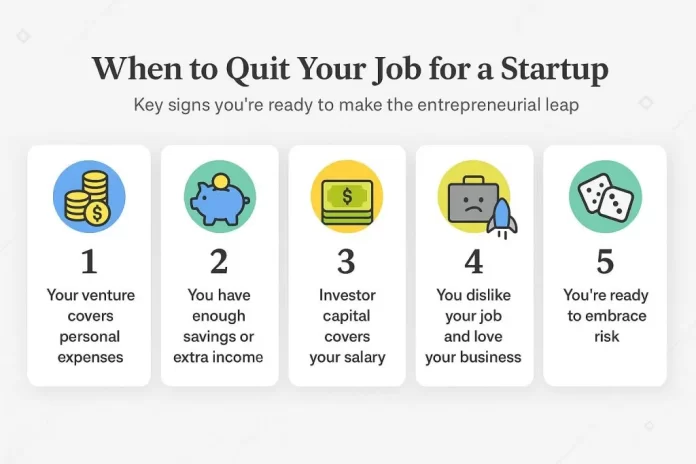
Do not quit your job because you are unhappy; quit when your business has validated demand, can replace 60-70% of your income, and you have 12 months of expenses saved. The parallel path, building while employed, is the safest strategy. When you take on real risk or sign contracts, form an LLC for $39 with Northwest.
Introduction:
The Question That Keeps You Up at Night
I remember sitting in my store one afternoon, watching the
street from the front windows. I was bored and thinking, What if I just
walked away from this business?
Maybe you’ve had that moment too.
Maybe it happened during your commute, when you realized you spend
more time with colleagues than your own family. Maybe it was during
another performance review where you smiled and nodded while your soul
slowly died. Or maybe, it was just a slow, creeping realization that you
were building someone else’s dream while yours collected dust.
For the last 20 years, I’ve worked for myself . Before that, I had
several small jobs, but the clear moment was, and I was already self
employed, when I opened a store, it was boring, not interesting and I
felt stuck. It worked and I was self employed but it didn’t fulfill me.
So I quit, lost money but followed my passion. And let me tell you
something: that decision was one of the dumbest things I ever did, and
one of the best. But the reason it worked out wasn’t because I was
brave. It was because I did what I was supposed to do, because I choose
me instead of security or what others think.
Here’s the question I get more than any other: When should I
quit my job and start a business?
I can’t give you a magic number. But I can give you a framework
that’ll help you figure it out for yourself. And I can tell you what
nobody warned me about.
Part of that framework is knowing when to make your business official. Once you take on real risk or sign contracts, an LLC protects your personal assets, and the service I recommend is Northwest Registered Agent.
Form Your LLC with Northwest for $39 →Lowest 3-year cost we found: Northwest $289 vs Bizee $298 vs ZenBusiness $497 (service fees; state fees extra). Northwest also puts its address on your public filings instead of yours where the state allows.
Let’s get into it.
Why
This Matters in 2026: The New Reality of Entrepreneurship
The pandemic fundamentally changed how people think about work. In
2022 alone, Americans created 5 million new businesses, and that surge
hasn’t really let up . People are fed up with inadequate wages, rigid
schedules, and the general sense that they’re just cogs in a
machine.
But here’s the thing I keep seeing: people romanticize quitting. They
want the Instagram moment of burning the bridge and walking out with a
laptop and a dream. They confuse recklessness with courage. Six months
later, they’re back at square one, broke and bitter, blaming the market
or timing or luck .
Here’s what I’ve learned from watching hundreds of
founders: the people who succeed don’t usually quit
first.
Research from the Academy of Management found that people who start
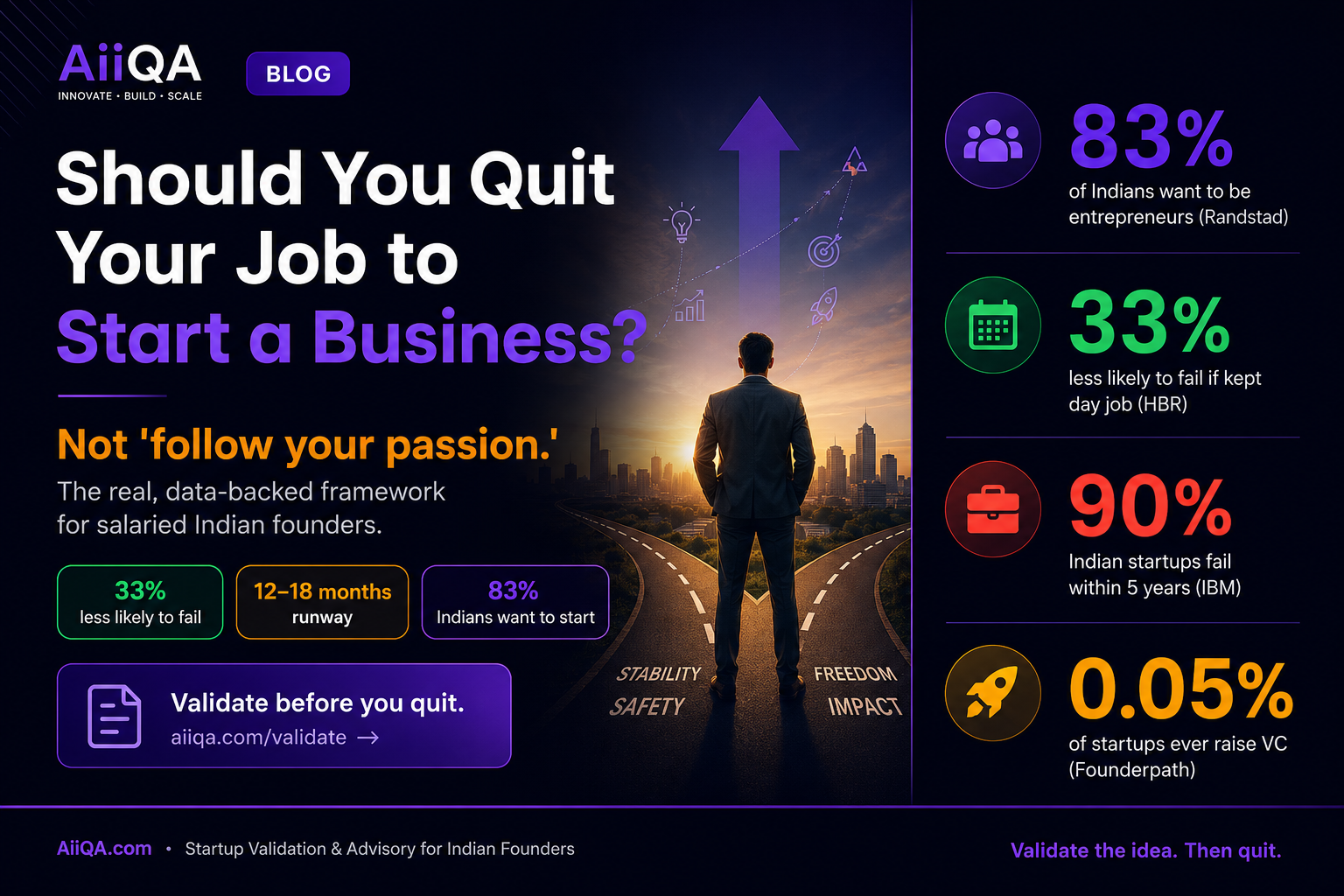
businesses while still employed are 33% less likely to fail than people
who jump without a safety net . Think about that. Your day job isn’t a
prison, it’s venture capital. It’s paying you to learn sales, time
management, and how to deal with difficult people. That’s free business
school with a paycheck attached .
And yet, I still meet people who think they need to make a dramatic
exit to be a “real” entrepreneur. That’s garbage. Mailchimp started as a
side project while the founders ran a web design firm. Basecamp was
built to solve an internal problem at a design consultancy. These
weren’t overnight successes, they were patient, methodical builds that
happened alongside something else .
The
“Parallel Path” Strategy: Why Staying Employed Is Often Smarter
Let me give you the most boring, unsexy advice you’ll hear
today: keep your job.
I know that’s not what you want to hear. You want permission to quit.
You want someone to tell you that your idea is so brilliant that staying
at your current gig is a waste of your potential. I get it. I’ve been
there.
But here’s what I’ve seen work for hundreds of business owners:
The parallel path, building your business in the
background while keeping your financial stability.
This isn’t a compromise. It’s a deliberate, disciplined strategy that
serious founders use . It allows you to:
- Test your idea without financial desperation: When
you’re not worried about paying rent, you can make better decisions. You
can listen to what customers actually want, rather than just chasing
revenue at all costs. - Build proof before you build a company: Talking to
potential users, running small pilots, testing willingness to pay. Many
ideas fail quietly at this stage, and that’s a win, it saves you time,
money, and emotional energy . - Learn while someone else pays you: Your job
teaches you skills you’ll need as a founder: handling clients, meeting
deadlines, managing pressure, navigating office politics. That’s all
free training .
I’ve seen this work so many times. Justin Welsh, who built a massive
audience around solopreneurship, puts it bluntly: “Don’t quit your job.
Use it as venture capital. Find a great job, do good work, and use your
salary to fund your first side business. Once you’re making 60% to 70%
of your take-home income on a regular basis, only then should you
consider leaving” .
The math here is simple: if you can cover 60-70% of your current
income from your business, the transition is manageable. With the 40
extra hours you get from quitting, you’re likely to figure out how to
make that 100% .
The Mailchimp Example
The founders of Mailchimp didn’t quit their day jobs to start the
company. They built it while running a web design firm. It wasn’t
supposed to be a high-growth startup, it started as a side project
funded by consistent professional income and shaped by real client
needs. The product didn’t become their main focus until it started
showing steady traction .
This approach reduced financial pressure and allowed natural
learning. They could improve the product carefully, driven by actual
user behavior rather than investor expectations .
The Basecamp Example
The founders of Basecamp were running a design consultancy and needed
a better way to manage projects internally. They didn’t set out to build
a massive software company, they built something to solve their own
operational problem. Before it ever became a standalone business, the
product was tested and refined through actual client work .
Signs You Might Be
Ready to Go Full-Time
Okay, so when should you quit?
I can’t give you a single answer, but I can give you a checklist.
Here are the signals that suggest you’re actually ready :
Consistent Customer Demand
You’re not just getting compliments, you’re getting repeat business.
People are coming back, referring others, and actively seeking you out.
This isn’t a one-time fluke; it’s a pattern.
Clear Revenue Potential
You know exactly how much you need to make each month to cover your
basics. Jim Price from Michigan Ross puts it simply: you need “a
realistic estimate of how much money you need each month for salary,
benefits, and overhead, and dividing that by your expected profit per
unit. This tells you how many units you need to sell each month to break
even” .
Don’t guess at this. Do the math.
Financial Preparedness
You have savings to cover at least 12 months of living expenses. Not
because you might need it, but because you will need
it. Business income is rarely smooth, especially at the start.
Budget for health insurance too. Leaving a job usually means leaving its
health plan, so price COBRA, a spouse’s plan, or a marketplace plan at
healthcare.gov before you resign, and include that monthly premium in
your 12 months of expenses.
You’ve Validated the
Business Model
You’ve done small-scale testing. You’ve talked to customers, run
prototypes, and confirmed that people will actually pay for what you’re
selling. You’re not guessing, you know .
The Business Has
Started to Consume You
This is a weird one, but it matters. When
you’re really ready to go full-time, your business
starts feeling like it’s already your full-time job. You’re thinking
about it constantly, working on it in the evenings and weekends, and the
day job is starting to feel like the distraction.
If these signals are present, the move to full-time entrepreneurship
feels less like a leap and more like a natural next step .
How to Start
a Business While Keeping Your Day Job
Let’s get practical. You’ve decided to start a business but keep your
job. How do you actually do it?
Organize Your Time
Ruthlessly
Time is your most valuable asset, especially when you’re already
working 40+ hours a week. Don’t forget the time you need for family,
rest, and being a human .
Get everything in a calendar. Include all commitments and divide each
task into achievable chunks. Look for dead time: lunch hours, commute
time, or vacation days. Use those blocks to develop your website, write
blog posts, or send pitches .
Small, realistic goals are better than big ambitions. Consistency
beats intensity.
Test Your Idea Before
Building
You might think your idea is brilliant. The market might
disagree.
Before you invest serious time or money, ask yourself :
- Does this solve a real pain point?
- Do I have a clear product/service?
- What’s my unique selling proposition?
- Who’s my target audience?
- How will I distribute this?
- What are my major costs?
- What are my revenue sources?
Then get out and test. Create a prototype and get user feedback.
Interview potential customers. Run surveys. Don’t just ask people if
they’d buy, try to get them to actually give you money. That’s the only
validation that counts .
Don’t Cross Your Employer
This should go without saying, but I’ve seen too many people learn
this the hard way :
- Don’t use company equipment for your business. NoI
remember sitting in my store one afternoon, watching the street from the
front windows. I was bored and thinking, What if I just walked away from
this business? laptops, no printers, no software licenses. - Don’t work on your business during office hours.
This isn’t just an ethical issue, it could create legal problems around
intellectual property. - Don’t compete with your employer. If you’re
planning to start a direct competitor, talk to a lawyer first.
Understand your non-disclosure and non-compete agreements. - Don’t use company intellectual property. This
should be obvious, but people do it anyway.
The goal here is to maintain a good relationship with your employer
if possible. They might even become a client or refer business to you
someday .
Consider Holding
Off on Formal Registration
Here’s a controversial one: you might not need to form an LLC or
register with the IRS immediately.
I know, I know, this sounds like bad advice. But hear me out. You
only need an Employer Identification Number (EIN) from the IRS when
you :
- Have employees
- Operate as a corporation or partnership
- File employment, excise, or alcohol/tobacco/firearms taxes
- Have a Keogh plan
- Are involved with certain types of organizations
Until you hit those triggers, you can operate as a sole proprietor.
This means less paperwork and fewer costs while you’re still testing.
Once you have real revenue and customers, you can formalize the
structure .
Business Ideas to Test on
the Side
I’m not here to give you a list of “100 business ideas you can start
today.” That’s generic nonsense. Instead, let me tell you where the best
ideas actually come from.
Your best business idea is probably hiding in your day
job.
Think about it: what inefficiencies do you see every day? What
customer complaints keep coming up? What processes are broken? What does
your company do that frustrates you? These are opportunities .
Your job exposes you to real problems in your industry, problems that
people would pay to solve. You don’t need to invent something new; you
need to find something broken and fix it.
Examples That Actually
Worked
Lan Ho was a Walgreens pharmacist making $120,000 a
year. She felt miserable and unfulfilled but didn’t quit immediately.
While still working, she experimented with side ventures, blogging,
fashion, other ideas. None of them took off. Then she realized she was
obsessed with coffee and the rituals around it. She started her coffee
company while still working, got furloughed during the pandemic, used
that time to launch fully, and when they asked her to come back, she
said no .
Today, Fat Miilk brings in over $500,000 a
year .
Abbie Franks was working as a junior designer when
she started selling prints on the side. She kept costs under £500, just
a printer, some paper, and basic packaging. She started on Etsy instead
of paying for a website, did her own branding, and gradually built from
there. Today, she sells to retailers like Anthropologie and
Oliver Bonas .
Charis Jones was a top sales professional when she
started her fashion brand Sassy Jones. She kept her job until she made
more money selling accessories at an expo than she made in two weeks at
work. Even then, she doesn’t advise others to do what she did. Her
advice: “Keep your day job until you know that your dream has
validity” .
What to Look For
When you’re evaluating business ideas while employed, focus on
problems that :
- Are real and recurring: One-off issues aren’t
businesses. People pay to fix problems that come back again and
again. - Can be tested on a small scale: You shouldn’t need
millions of dollars to validate this. Can you test it with a few
customers and a simple prototype? - Don’t create conflicts of interest: Don’t compete
with your employer or use their confidential information.
The
Financial Reality Check: What You Actually Need
Let me get real with you about money. Because I’ve seen too many
people quit without enough runway, and it’s devastating.
How Much Money Do You
Actually Need?
Here’s the reality: it depends on your business model.
Service businesses (consulting, freelancing,
coaching) can often start with very little money. Abbie Franks started
her design studio with less than £500 . But the trade-off is that you’re
trading time for money, you can only work so many hours.
Product businesses typically require more upfront
capital. Inventory, manufacturing, shipping, it adds up fast. Lan Ho
borrowed money from family and lived off credit cards to bootstrap her
coffee company. She says the first three years were “survival
mode” .
Tech businesses often require the most capital, or
the least, depending on how you approach it. If you can code, you can
build for nearly free. If you need developers, you’re looking at
significant costs.
The Real Math
Here’s the formula I use with clients:
Monthly living expenses × 12 = Your minimum startup
savings
Why 12 months? Because business income is unpredictable. You’ll have
good months and bad months. You need enough cushion that a slow quarter
doesn’t put you on the street.
But here’s the trick: you might not need that much if you keep your
job. The hybrid path means you can start with less savings because you
still have income.
Jim Price’s formula is the most practical I’ve seen: calculate your
monthly costs (salary, benefits, overhead), divide that by your expected
profit per unit, and that tells you how many units you need to sell to
break even. Use that number to determine if your business is
viable .
The Tax Reality
I can’t believe how many founders ignore this.
If you make money, you owe taxes.
Whether you’re registered as a business or not, you still need to
report income and pay taxes on it . And you need to set aside money for
estimated quarterly tax payments, especially if you’re still employed
and your withholding isn’t accounting for side income.
I’ve watched people get crushed by surprise tax bills. Don’t be one
of them.
Common Mistakes
That Sink First-Time Founders
I’ve seen a lot of entrepreneurs fail. Not because they weren’t
talented or hardworking, but because they made predictable, avoidable
mistakes.
Quitting Too Early
This is the big one. People quit because they hate their job, not
because their business is ready. They confuse discomfort with
destiny.
The research is clear: those who keep their day job while starting a
business are 33% more likely to succeed . Yet people still romanticize
the big quit.
Don’t quit because you’re unhappy. Start a business because
you’ve validated a real opportunity. Then quit when the math
works.
Not Validating Before
Building
Another classic. People fall in love with their idea and spend months
(or years) building something nobody wants.
I’ve done this myself. It sucks.
You don’t need a perfect product, you need to know if anyone will pay
for it. That’s it. Everything else is noise .
Overcomplicating the Start
Abbie Franks started with a £200 printer and some paper. She used
Etsy instead of building a website. She designed her own branding. She
kept early costs under £500 .
Her advice: “You don’t need a big budget to get started. Look at what
you can do yourself, whether that’s branding, websites, photography, or
marketing, and build from there. Keeping early costs low can give you the
breathing room you need to grow at your own pace” .
Not Building a Support
Network
This one surprised me. Transitioning to self-employment can be
lonely. Having a strong support network is essential.
Gabby Ianniello, who quit her Wall Street job to start Corporate
Quitter, said one of her biggest challenges was not having a support
system: “I basically had a chop block, clear slate, and started
over” .
Find other entrepreneurs. Join business groups. Get a mentor. It’s
not just about emotional support, it’s about learning from people who’ve
made the mistakes you’re about to make .
Not Treating It Like a
Business
This is surprisingly common, especially with creative businesses.
People treat their side project like a hobby and then wonder why it’s
not generating real money.
Gabby Ianniello puts it bluntly: “Treat it like a hobby, get hobby
results” .
If you want it to be a business, treat it like one from day one.
Track your finances, set goals, create structure, and hold yourself
accountable.
Treating it like a real business includes giving it a real legal structure once it earns. You can form your LLC for $39 with Northwest.
Start Your LLC for $39 with Northwest →
My
Recommendations: Who Should Quit and Who Should Wait
I get asked this constantly. Let me be blunt.
Who Should Seriously
Consider Quitting
You have validated demand. You’ve sold something to
real customers, not just friends and family. You have evidence that
people will pay for what you offer.
You can replace 60-70% of your income from the
business. Justin Welsh’s rule is a good one. Once you’re consistently
hitting that number, you can consider the transition .
You have at least 12 months of expenses
saved. Business income is volatile. If you don’t have enough
runway, you’ll make desperate decisions.
You’ve tested the business model. You know your
costs, your margins, and your customer acquisition channels. You’re not
guessing.
You’re ready to work harder than you ever
have. Entrepreneurship isn’t liberation from work, it’s taking
responsibility for everything. You’ll work more hours, handle more
stress, and deal with more uncertainty.
You can handle the uncertainty. Some people thrive
in ambiguity. Others crave stability. Be honest with yourself about
which one you are.
Who Should Wait
You haven’t tested anything. If you’re still in the
“I have an idea” phase, keep your job. Build something small, see if
anyone cares, and then reassess.
You hate your job. This is a terrible reason to
start a business. Start a business because you see an opportunity, not
because you’re running away from something.
You’re broke. If you don’t have savings, the stress
of entrepreneurship will crush you. Build your financial foundation
first.
You haven’t built any skills. If your business
requires skills you don’t have (sales, marketing, accounting, whatever),
take the time to learn. Use your job as a training ground.
You’re looking for an easy way out. This isn’t easy.
It’s probably harder than what you’re doing now. If you think
entrepreneurship is the lazy way out, you’re in for a rude
awakening.
The Honest Truth
Here’s what I tell people: if you can build your business
while keeping your job, do it.
The hybrid path reduces financial stress, gives you time to learn,
and lets you validate your idea without pressure . It’s not the sexiest
approach, but it’s the most likely to work.
The people I’ve seen succeed with this approach are disciplined and
patient. They work on their business nights and weekends. They accept
that the transition will take time. They treat their job as fuel for
their entrepreneurial journey, not a chain holding them back .
When to Form an LLC (and
When to Wait)
Before you file, it helps to understand how to form an LLC step by step, what it will cost in your state, and which formation service is best. If you freelance or consult, see our guide to an LLC for freelancers and consultants.
Forming an LLC is one of the most common questions I get. Should you
do it immediately? Should you wait? Let’s break it down.
What an LLC Actually Does
An LLC (Limited Liability Company) protects your personal assets if
your business gets sued. If your business is sued and you’re a sole
proprietor, creditors can come after your personal bank accounts, house,
car, etc. With an LLC, your personal assets are generally protected.
That protection is exactly why I form an LLC once a business takes on real liability. Northwest files yours for $39 plus the state fee.
Create Your LLC with Northwest →
That’s the big benefit. There are tax implications too, but for most
small businesses, the main reason to form an LLC is liability
protection.
When to Form an LLC
If you’re dealing with significant liability. If
you’re selling physical products, offering professional services, or
working in any industry where you could potentially be sued, you should
form an LLC.
If you have personal assets to protect. If you own a
home, have significant savings, or have any assets you don’t want to
lose in a lawsuit, form an LLC.
When you’re ready to open a business bank
account. Most banks require an LLC or other formal business
structure to open a business account. If you’re starting to process
significant payments, this matters .
When you want to establish credibility. Some clients
and partners want to work with formal businesses. An LLC signals that
you’re serious.
When to Wait
If you’re just testing. If you’re still validating
your idea and haven’t made any sales, you don’t need an LLC. Keep costs
low and wait until you have proof of demand .
If you’re in a low-risk business. If you’re a
consultant or service provider with minimal risk of getting sued, you
might be fine as a sole proprietor, at least at the start.
If you’re the only person involved. The simpler your
business structure, the less paperwork and expense. If you don’t have
employees or partners, a sole proprietorship might work until you
grow.
Practical Advice
Don’t rush the LLC formation. Gabby Ianniello said
it took her 11 months to create an LLC, and she wishes she’d done it
earlier . But that’s different from forming one too early. The point is:
form it when the business is real and the benefits outweigh the
costs.
Formalize the structure as you grow. Once you have
real revenue, customers, and assets to protect, it’s time to formalize.
But don’t do it just because you have an idea.
Form Your LLC with Northwest for $39 →
Final
Thoughts: Honest Advice from Someone Who’s Been There
I’ve been doing this for a long time. I’ve seen businesses succeed
and fail. I’ve made my own mistakes and learned from them. Here’s what I
want you to remember:
The biggest myth in entrepreneurship is that you need to take
a big risk to succeed. The data says otherwise. The people who
keep their day jobs while starting their businesses are more likely to
succeed .
Your job is not the enemy. It’s the fuel for your
entrepreneurial journey. It pays you to learn how to sell, manage time
under pressure, and deal with difficult people. That’s free business
school with a paycheck attached .
Validation beats passion every time. You can be
passionate about something nobody wants to buy. That’s not a business,
it’s a hobby. Treat your business like a business from day one .
The transition is worth it, when you’re ready. I’m
not trying to discourage you. I’m trying to make you smart about this.
Entrepreneurship has been the best decision of my life. But it’s also
been the hardest. The people who succeed are the ones who don’t rush
it.
Remember Charis Jones’s words: “There’s no such
thing as an entrepreneur who can just snap their fingers because they’re
an influencer or they’re popular, they have a million followers, to
actually generate revenue with that, because popularity is not
profitable, and likes don’t equal liquidity” .
Build something real. Validate it. Then take the leap, when the
numbers, not your emotions, say you’re ready.
Ready to turn your idea into a real, protected business?
Northwest Registered Agent files your LLC for $39 + state fee, including a free year of registered agent service, business address privacy, and everything you need to look professional from day one.
- Best AI Business Ideas for Beginners
- Low-Competition Local Business Ideas
- How to Validate a Business Idea Before You Waste Time and Money
- 10 Mistakes New Entrepreneurs Make
Sources
- S.P. Jain Institute of Management and Research (SPJIMR). “How to
start a business without quitting your job.” 2026. - Murphy Jr., Bill. “Should You Quit Your Job and Start a Business?
Answer These 20 Questions to Decide.” Inc.com. 2025. - Welsh, Justin. LinkedIn post on using employment as venture capital.
2026. - CNBC Make It. “She quit her job as a Walgreens pharmacist to start a
Vietnamese coffee company–today, it brings in over $500,000 a year.”
2025. - Novo Business Banking. “Now is the Perfect Time to Quit Your Job and
Start a Business.” 2024. - Simply Business. “I quit my job to chase a creative dream – here’s
what no one warned me about.” 2026. - Black Enterprise. “Charis Jones Talks Using Her Work History to
Scale Sassy Jones Into HSN Partnership.” 2025. - Raffiee, Joseph, and Jie Feng. “Should I Quit My Day Job? A Hybrid
Path to Entrepreneurship.” Academy of Management Journal 57, no. 4
(2014): 936–963. - LivePlan. “How to Start a Business While You’re Still Employed.”
2026.